Where the Music Does the Counting: Ataşehir's Wedding Floors and the Cardio Habit That Outlives the Party
The Room Above the Bakery
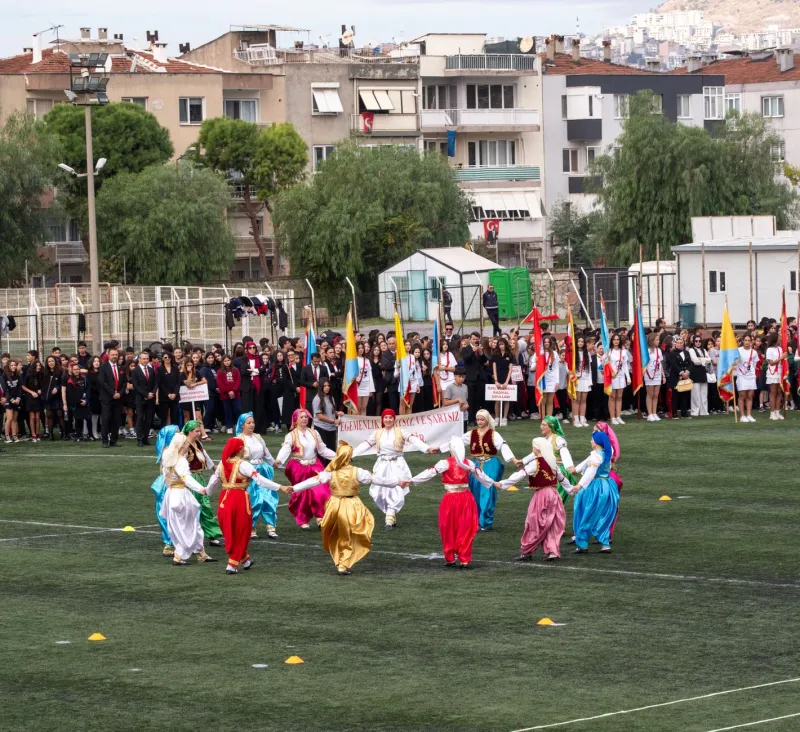
It's a Thursday in late October, and the second-floor salon above a bakery in Kozyatağı has been booked for an engagement party. There is no DJ, no mirror wall, no instructor with a headset. There is a hired singer with a keyboard, a darbuka player who keeps time like a metronome with opinions, and about seventy women ranging in age from nineteen to seventy-eight.
By nine o'clock the chairs along the wall are empty.
Nurten, fifty-eight, has been on her feet for forty minutes. She is wearing low heels she will regret tomorrow and a shawl she has already abandoned on a chair. She is not thinking about her heart rate. She is thinking about the fact that her cousin's daughter is getting married, that the bride's mother cried during the entrance, and that the next song is one she has known since she was twelve.
“I don't come here to exercise,” she says later, fanning herself with a napkin. “I come here because it's a happy night. But look — I danced for two hours. At home I can't walk twenty minutes on a treadmill without getting bored.”
That gap — between what women will do willingly for two hours and what they will abandon after eleven days in January — is the whole story.
Why Nobody Quits in Here
Ask a room full of Ataşehir women why they stop going to the gym and you'll hear the usual list: the membership was far, the hours were awkward, the classes were full of people who already knew the moves. Ask them why they never leave a wedding early, and the answer is simpler. Someone is watching for them. A circle opens. A hand pulls them in.
The mechanics are worth naming, because they explain why this kind of movement holds.
The pace is set by the music, not by a screen. A slow opening gives way to a fast oyun havası, then a line dance with the arms linked, then something slower while people catch their breath and drink tea. Without anyone planning it, that's an interval session — roughly forty to sixty seconds of hard effort, a recovery, then another push.
The effort is social, not private. Researchers who study exercise adherence keep landing on the same finding: people stick with activity that is tied to a relationship or a standing appointment. A gym class ends when you stop paying. A wedding invitation is a date on the calendar with your aunt attached to it.
There is no mirror. This sounds trivial and isn't. Half the women in that salon have spent decades being told their bodies are a project. On the dance floor the body is an instrument, not an audition.
And nobody is counting. No step target, no rings, no weekly summary. The reward is the room, and the room is warm.
What the Line Actually Does for a Body
Let's be honest about the physiology without overselling it. Dancing in a warm hall for a hundred minutes is not a substitute for medical care, and no one should start a new exercise habit after sixty without a word with their doctor — especially with knee or hip issues, balance concerns, or a heart condition.
That said, a long night of dancing is a genuinely respectable bout of moderate-to-vigorous activity. There's sustained standing, lateral movement, arm work, and enough small balance challenges to matter. Add the tea breaks and it looks a lot like the recommendations cardiologists hand out — regular, moderate, broken into bursts.
The difference is compliance. A workout you dread gets postponed. A night out with your neighbors does not.
The Stamina Nobody Trains For
Sema, sixty-four, a retired teacher from Örnek, has a theory about why the older women in her family can outlast the young ones.
“The girls sit down and look at their phones,” she says. “We grew up doing this. We know how to pace ourselves. You don't sprint the first song. You save something for the halay.”
That is, essentially, coaching. The older women are modeling pacing, hydration, and the art of sitting out one song without treating it as failure — a skill that most fitness apps never teach and that many first-time gym members badly need.
Bring It Home: Starting a Circle of Your Own
You don't need a wedding. You need six women, a room, and a playlist with a shape.
Find the room first. A church hall, an apartment building's community room, a library meeting space, a neighbor's finished basement. Free or cheap beats fancy.
Invite for the company, not the cardio. If you advertise a workout, people will feel obligated and then feel guilty. If you advertise “tea and dancing, second Sunday,” they'll show up.
Build a forty-minute set list with waves. Ten minutes of something slow enough to talk over, eight minutes fast, three minutes slow, eight minutes fast, the rest whatever the group shouts for. Repeat weekly.
Rotate the host. Shared hosting kills the drop-off. When it's your turn, you come.
Set two rules. No mirrors, no step counts. If someone wants to sit and clap, that counts as showing up.
Let the youngest learn from the oldest. The point isn't a perfect move. It's that a seventy-eight-year-old and a nineteen-year-old are in the same line, keeping each other's time.
The Guest Who Stays
The engagement party ends at eleven. The chairs go back against the wall, someone's brother loads the speakers into a car, and the women walk out into the Ataşehir night in twos and threes, still humming.
Tomorrow most of them will not go to a gym. They'll go to work, or to their mother's apartment, or to the market on the corner. But next month there will be another invitation, and they will dance again.
That's the whole trick, really. Not motivation. A calendar full of reasons to move, other people expecting you, and music loud enough that nobody remembers to count.